KARSKI
&
The Lords of
Humanity

a Film by
Slawomir Grünberg
Almost every individual
was sympathetic to my reports concerning
the Jews, but when I reported to the leaders of governments,
they discarded their conscience, their personal feeling.
Jan Karski

We propose a film about Jan Karski – an emissary of the Polish underground government during World War II whose most prominent mission was to inform the allied powers of Nazi crimes against the Jews of Europe in order to try to prevent the Holocaust as we know it.
This film will tell an incredible story of a single life joggled between life and death while fulfilling a desperate mission to stop the annihilation of European Jews. It will be a story of a man who infiltrated both the Warsaw Ghetto and a Nazi concentration camp and carried out eyewitness accounts of the atrocities to the West, where the report was met mostly with disbelief and no concrete action was undertaken in order to prevent the Holocaust.
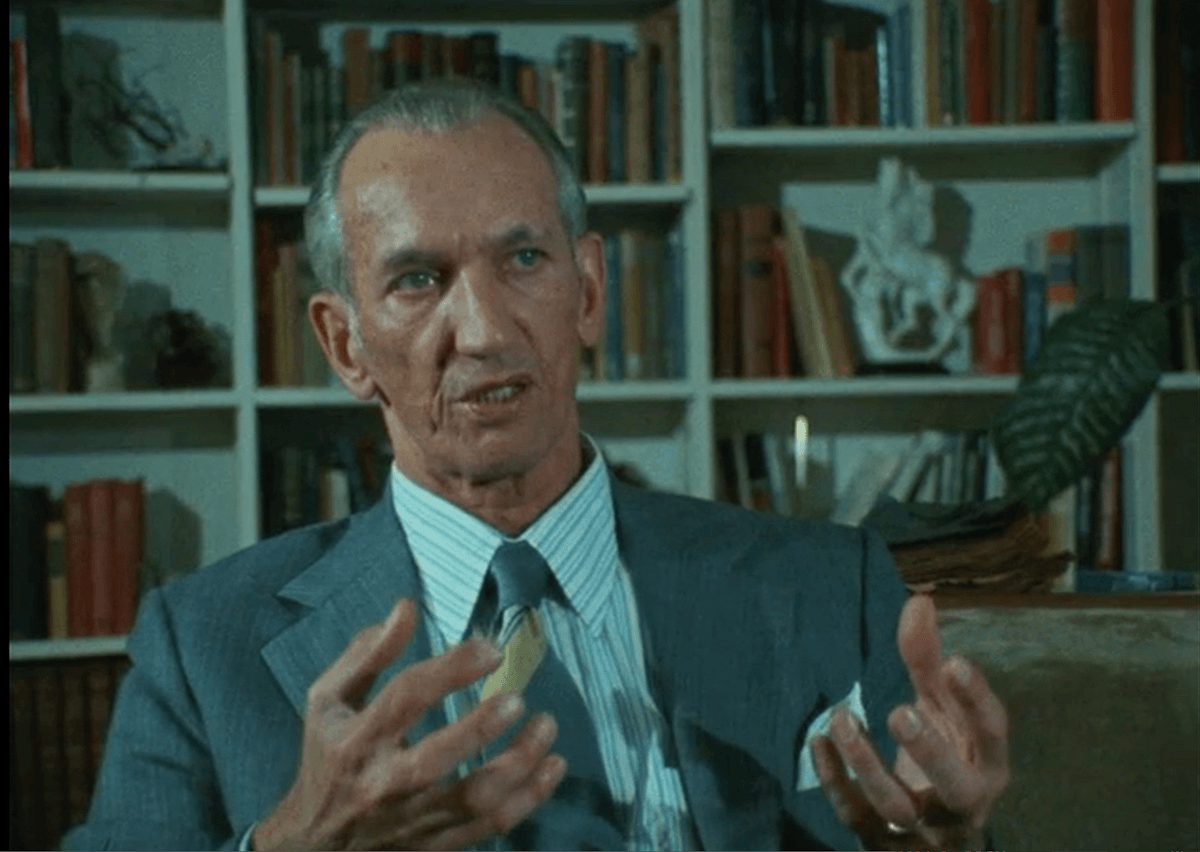
The film will employ fiction-like scenes shot in rotoscope technology and other animation techniques intertwined with documentary scenes and archival footage, including authentic voice-over by Jan Karski himself. Thanks to the animation techniques we will be able to recreate the subsequent events, which took place during Karski’s World War II mission. We will be able to recreate his treacherous visit to the Warsaw Ghetto, where he witnessed the indignities and traumas to which Jews were being subjected in Nazi-occupied Poland only months preceding the Final Solution. Hours of interviews recorded with Jan Karski after the war will provide the most authentic first person narrative, and will accompany the animated reenactment of events against the background of authentic archival footage.
Jan Karski was born in 1914 in Lodz, Poland. Christened Jan Kozielewski, he was raised by his intelligentsia family, which had very patriotic, Polish Catholic roots. The name Karski was one of his military pseudonyms after he joined the Underground Bureau of Information and Propaganda, whose mission was to resist Nazi occupation. During World War II, he became a courier between the resistance movement in Poland and the Government-In-Exile. What turned out to be Karski’s most important mission and one of the most important missions in the history of World War II, took place in the Summer of 1942. He was already in the final stages in preparation for his next trip to meet the representatives of the Polish government in exile, and the British officials. Before his trip he would be approached by the representatives of Jewish organizations from the Warsaw Ghetto, were to request that concrete information about the situation of the Jewish population be carried to the Allies in a plea for help. The Jewish leaders who met with Jan believed that no one in the West would listen to him unless could provide a first hand description of what taking place in the ghetto. Karski needed to see the extermination machine in operation, in person. This was beyond the scope of Karski’s duties as an underground emissary, but he agreed to follow this suggestion.
Following the meeting with the Jewish leaders, Karski was smuggled into the Warsaw Ghetto. What he saw there would haunt him for the rest of his life. If the ghetto experience wasn’t enough, Karski was taken to a sorting camp near the death camp of Belzec. There he saw brutality on a mass scale, becoming a witness to genocide. He had to be physically carried out of the camp, where he experienced a nervous breakdown. The photographic memory, which made Karski a brilliant war courier, became his curse, never allowing him to forget the images he would no longer want to remember.
First reports about what Karski saw reached London in the Summer of 1942. A microfilm containing condensed information in English about the persecution of the Jews reached the government. It spoke of Himmler’s order to exterminate half of the Jewish population by the end of 1942 and about one million of those Jews who had already perished.
In the Fall of 1942, the Polish Government-in-Exile released Karski’s report to the world press. Many newspapers around the world carried the news, most did not. In the Summer of 1943, Karski decided to make his way to the United States and carry his testimony directly to President Roosevelt. First, a meeting was arranged with Supreme Court justice Felix Frankfurter. After a detailed description of the ghetto and concentration camp, Frankfurter said that he was unable to believe him.
The meeting with Roosevelt was a secret one. Karski was brought into his office through a back door. During the meeting, Karski steered the conversation from the general matters towards death camps and treatment of the Jews. He talked about the Nazis’ plan to ruin the Polish state, but –more specifically – about the systematic plan to destroy the biological substance of the Jewish nation, which would cease to exist without allied intervention. Roosevelt was polite but somewhat evasive. Karski could not tell whether he believed him or not. What was clear was that Roosevelt made no promise of action.
The course of Karski’s mission, including the visits to the Warsaw Ghetto and to the concentration camp, but also his meetings in London and in Washington will be reconstructed by means of advanced animation technologies. This artistic vision combined with authentic archival footage will create a unique film reality, which will bring this compelling story to life. The viewer will be captured by the fiction-like quality of the animated events, while at the same time she or he will be reminded of the authenticity of Jan Karski’s narrative.
The special technologies applied in this film will either be rotoscoping or will resemble it (for reference see Ari Folman’s award-winning “Waltz with Bashir”). Rotoscoping will be combined with creative animation, allowing reconstruction of events, which were never captured on film. The animated scenes will be intertwined with archival footage from World War II, interviews recorded after the war, and more contemporary interviews and scenes related to Karski’s mission.
The film will be completed in HDCAM (High Definition) format. It will be presented as a 90-minute theatrical version and a 52-minute TV version. The completed film will be presented as a 90-minute theatrical version and a 52-minute TV version and distributed through the following channels:
- Film Festivals
- Television stations (worldwide distribution including PBS, which offered a written letter of interest)
- Movie Theaters
- On-Line Movies
- DVDs and Blue-Ray Disks for the Educational Market (Schools, Universities, Libraries) distribution through LOGTV, Ltd: www.logtv.com/films).
The film will be directed by Slawomir Grunberg – an Emmy Award-winning Polish-born US-based documentary producer, director and cameraman; graduate of the Polish Film School in Lodz, who has directed and produced over 40 documentaries, many of them related to the history of Polish Jews, including The Peretzniks, Paint What You Remember, The Legacy of Jedwabne, Saved by Deportation. His many awards include also the Jan Karski Award for “Moral Courage”. Slawomir's Director of Photography credits include 2 Academy Award nominations, for Legacy and Sister Rose's Passion. In 2010 he co-produced and photographed Mary Skinner’s In the Name of Their Mothers: The Story of Irena Sendler.
- Director/Producer: Slawomir Grunberg
- Second Director & Editor: Katka Reszke
- Director of Photography: Slawomir Grunberg
- Co-Producer: Jacek Kulczycki (Poland)
- Co-Producer: Robert Podgursky (USA)
- Marek Rozenbaum (Israel)
- Co-Writer: Thomas Wood (USA)
- Co-Writer: Maciej Kozlowski (Poland)
- Production Manager: Lea Wolinetz
Current Production Companies Involved:
LOGTV (USA), OTO Film (Poland), Transfax Film Production (Israel)
Official Website: www.jankarski.com
Link to: 'The Jan Karski Story' on Net Currents TV which
features Slawomir Grunberg working on his film:
http://netny.net/currents/video/stories/the-jan-karski-story/
For more information and publicity on Jan Karski see also:
http://www.wallenberg.umich.edu/karski.html
http://partners.nytimes.com/library/world/europe/071500poland-karski.html
http://www1.yadvashem.org/righteous_new/poland/karski_testimony1.html
Upamietnili wybitnego lodzianina Jana Karskiego
Joanna Podolska
Gazeta Wyborcza ?ód?
2010-07-13
- To byl czlowiek, ktory chcial zmienic swiat - mowil w Warszawie podczas wczorajszej dyskusji rezyser Slawomir Grunberg, pracujacy nad nowym filmem o wielkim Polaku, wielkim lodzianinie.
W warszawskim kinie Kultura na Krakowskim Przedmie?ciu rozmawiano we wtorek o Janie Karskim, bohaterskim emisariuszu Podziemnego Pa?stwa Polskiego. Dok?adnie 13 lipca min??o dziesi?? lat od jego ?mierci.
Przemawiali ambasadorzy Francji, Izraela, historycy i szefowie instytucji propaguj?cych posta? wybitnego Polaka.
To pocz?tek wieloletniego projektu "Jan Karski - niedoko?czona misja". - Misj? Karskiego by?o poinformowanie ?wiata o tym, co si? dzieje z ?ydami na okupowanych ziemiach polskich. Nasz? misj? jest poinformowanie Polaków, co si? dzia?o tutaj - stwierdzi? Bohdan Bia?ek ze Stowarzyszenia im. Jana Karskiego.
- Nie zag?askajmy profesora Karskiego. To by?a posta? z krwi i ko?ci. Zdecydowany, czasami maj?cy kontrowersyjne pogl?dy, które odwa?nie wyra?a? - mówi? historyk Andrzej ?bikowski, autor powstaj?cej w?a?nie biografii s?ynnego kuriera Polskiego Pa?stwa Podziemnego.
Po raz pierwszy pokazano w Polsce "Raport Karskiego", film Claude'a Laudmanna wyprodukowany we Francji w 2010 roku, a tak?e króciutki fragment powstaj?cego w?a?nie cz??ciowo animowanego filmu "A Lord of Humanity" ("W?adca ludzko?ci"). To cytat, którym Karski okre?li? w?adców zachodnich pa?stw. Pracuje nad nim znakomity dokumentalista, absolwent ?ódzkiej Szko?y Filmowej S?awomir Grunberg. Wspó?autorem scenariusza jest dyplomata Maciej Koz?owski. Dokument zdoby? ju? dofinansowanie w ?odzi, ale wci?? na ca?ym ?wiecie zbierane s? fundusze, aby projekt zrealizowa?.
W dyskusyjnym panelu "Pami?? o Janie Karskim" troch? zabrak?o ?ódzkiego akcentu. O upami?tnianiu Karskiego mówili m.in. przedstawiciele Kielc, Krakowa i Rudy ?l?skiej. Na szcz??cie w dyskusji przypomniane zosta?o, ?e Jan Karski jest nie tylko doktorem honoris causa Uniwersytetu ?ódzkiego i honorowym obywatelem ?odzi, lecz tak?e ma swoj? ulic?, ?aweczk? i gabinet w pa?acu Pozna?skiego. Kto? z sali doda?, ?e ?ód? mo?e pochwali? si? pomnikiem Sprawiedliwych w?ród Narodów ?wiata i niewielkim pomnikiem dedykowanym ?egocie. Na przysz?y rok planowane s? kolejne wydarzenia dedykowane wielkiemu Polakowi, wielkiemu ?odzianinowi.
?ród?o: Gazeta Wyborcza ?ód?
Interview with Slawomir Grunberg, The Polish American Awareness Foundation (PAAF) , Chicago (excerpts)
Grunberg, founder of Log In Productions, has been living and making films in the United States for nearly 30 years. Many of these films have dealt with both Polish-Jewish subjects. In 2000, Slawomir Grunberg’s feature documentary, School Pratyer: A Community at War (2000), won the Jan Karksi Award, given to filmmakers who have “exhibited moral courage on behalf of others.” Jan Karski presented Grunberg with the award himself. It was one of his last public appearances. He passed away months later at the age of 86.
“My goal in documentary filmmaking is to make films which can - in even the smallest way - change the world we live in: reveal unknown-but - important situations, help better understand one another, educate people about existing conflicts, and look for solutions in solving them.”
In the case of the Karski documentary, Grunberg sees the opportunity for this as well, and in all a more action-filled story than most documentary subjects provide. “This story has all the elements a good film needs, documentary or otherwise. There’s drama, conflict, charisma, bravery, and a message all of humanity can relate to,” adds Grunberg.
To accommodate the dual complexity of the story and message, Grunberg plans to combine traditional documentary elements with fiction film devices and the aforementioned rotoscoping. The challenge, Grunberg admits, is combining these elements for a final effect that audiences respond to.
One difference between the Karski film and most documentaries will be the lack of consistent interviews. Instead of using footage of Karski himself, the film will bring to life his message through animated reenactments of his words and deeds. One often revisited interview with famed Polish activist Professor Wladislaw Bartoszewski will serve as periodic narration of the Karski story. Another short interview with President Bill Clinton, a former student of Karski’s at Georgetown, will be utilized.
Ultimately, after nearly 60 years, a story Karski always intended for Hollywood will finally get there.“It’s amazing that such a rich and complex life was so underappreciated for so long,” muses Grunberg.
In the ‘40s, Karski tried to convince Hollywood that his story was film-worthy, but he was ignored because of its politically incorrectness. In Communist Poland, it was ignored for the same reason. Finally, during the twilight of Karski’s life he was “rediscovered” by documentarian Claude Lanzmann as he compiled interview footage for his 9-hour Holocaust film, Shoah (1985). Since then, interest in Karski and examination of his story has slowly grown.
Adds Grunberg, “What surprises me is that he may have been forgotten forever if not for this documentary.”
In the end, education and change is what all involved with this project hope for. And with one will come the other. While the film will certainly target American and Polish audiences, it addresses subject matter that will surely prove meaningful and relevant to residents of numerous continents and countries. Above all, the story will aim to further reconcile Polish and Jewish relations.
Concludes Grunberg, “What Karski did as a Polish Gentile to spread information about the Holocaust will always make him the best person to moderate this dialogue between Jews and Poles. Education is what’s needed to bring about change, and I see this film and the story of Karski’s life greatly facilitating this much-needed change.”
The Polish American Awareness Foundation (PAAF)
Note in Polish
Slawomir Grunberg jest w trakcie realizacji filmu dokumentalnego o Janie Karskim – emisariuszu rzadu polskiego na uchodzstwie, ktory podczas II wojny swiatowej probowal zapobiec eksterminacji Zydow europejskich. Jego proby przekazania wladzom alianckim wstrzasajacych informacji na temat zaglady Zydow na terenie Polski spotkaly sie z niedowierzaniem I w rezultacie Zachod nie podjal konkretnych dzialan aby powstrzymac Holokaust.
Realizowany project filmowy ma sluzyc przyblizeniu sylwetki jednego z najwiekszych polskich bohaterow XX wieku, a takze honorowego obywatela panstwa Izrael oraz profesora renomowanych uczelni amerykanskich (w tym Uniwersytetu Georgetown, gdzie jednym z jego studentow byl Bill Clinton).
Zdjecia do filmu Slawek Grunberg rozpoczal 11 listopada 2007 w Nowym Jorku, gdzie przed siedziba Konsulatu Polskiego w centrum Manhattanu imieniem Jana Karskiego nazwano skrzyzowanie dwoch ulic I tamze odslonieto poswiecony mu pomnik. Do pracy nad filmem przylaczylo sie takze Ministerstwo Spraw Zagranicznych RP.
"Zalezy nam na dotarciu do widowni poza Polska - mowil Slawek Grunberg, dokumentalista pracujacy od 27 lat w Stanach Zjednoczonych –Karski, ktory wielokrotnie ryzykowal wlasne zycie dla ratowania zycia innych ludzi, reprezentuje unikalny model etyczny I jego sylwetka powinna byc jak najszerzej poznana zarowno w Polsce, jak I w Stanach I w Izraelu, a takze w innych krajach. Amerykanska telewizja publiczan wyrazila juz zainteresowanie emisja filmu. Kolejne zdjecia realizowane beda w Polsce, w USA i w Izraelu, przewiduje sie tez wykorzystanie amerykanskich materialow archiwalnych, a takze realizacje scen fabularyzowanych”.